Sixty years of a local history magazine, searchable down to the page.
The Queenstown & District Historical Society has looked after the history of the Whakatipu since 1965, and since 1966 it has published the Queenstown Courier twice a year: 114 issues of researched articles, memoirs and Society news. That archive is the most valuable thing the Society owns, and on the old site it was a list of PDF links you had to already know how to use.
The job was to rebuild the site from scratch, make the whole archive findable by anyone, and hand it back so volunteers can run it without a developer.
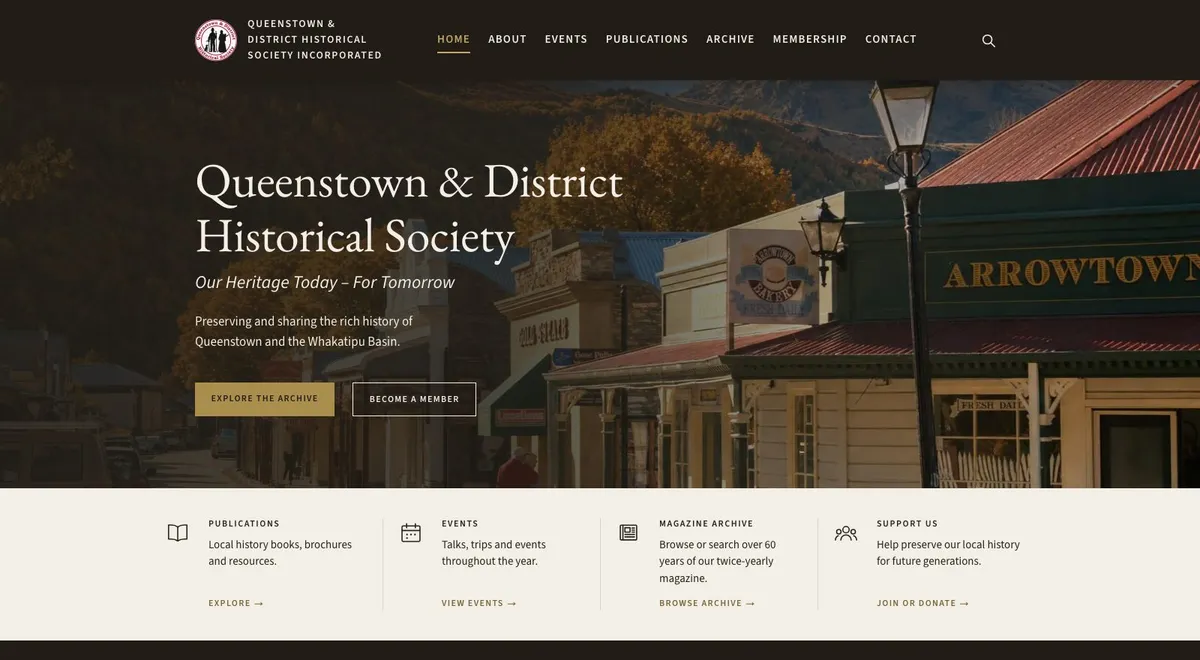
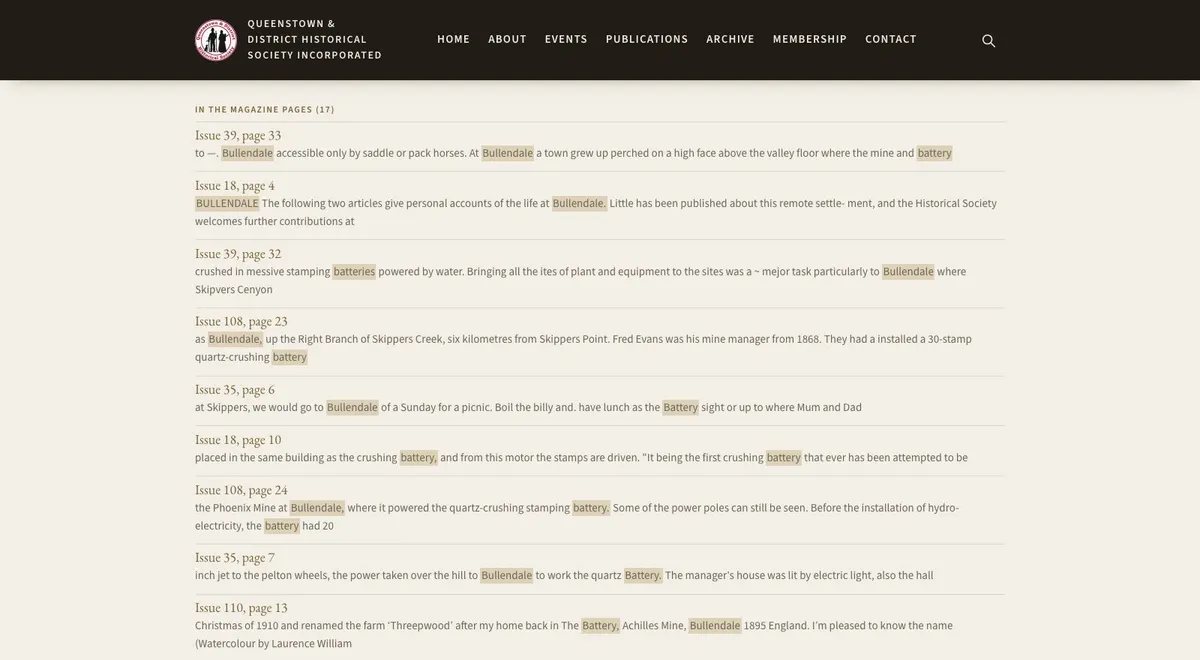
One search box in the header covers everything: the site’s pages, the history stories, the events programme, all 2,140 entries in the Society’s own Courier index, and the full text of 2,321 magazine pages. Every page has been machine-read, so a search for a surname, a mine or a hut finds the page it is printed on, with the matching words highlighted.
Every magazine result opens the issue at that page. That sounds simple and is not: phones ignore page links inside PDFs, so the site carries its own reader, and a link to page 23 of issue 108 lands on page 23 on any device. The raw PDF is always one tap away.
The archive itself is a wall of covers in five-year blocks, and its index search answers as you type. The search runs in the browser against indexes built at deploy, so there is no search service to pay for or keep alive.
The district’s history is told in six eras, from the early times through the gold rush to the present, with stories nested under each. Facts carry citations to the Courier issue and page they came from, and the build refuses to publish a citation that points nowhere, so the history stays checkable.
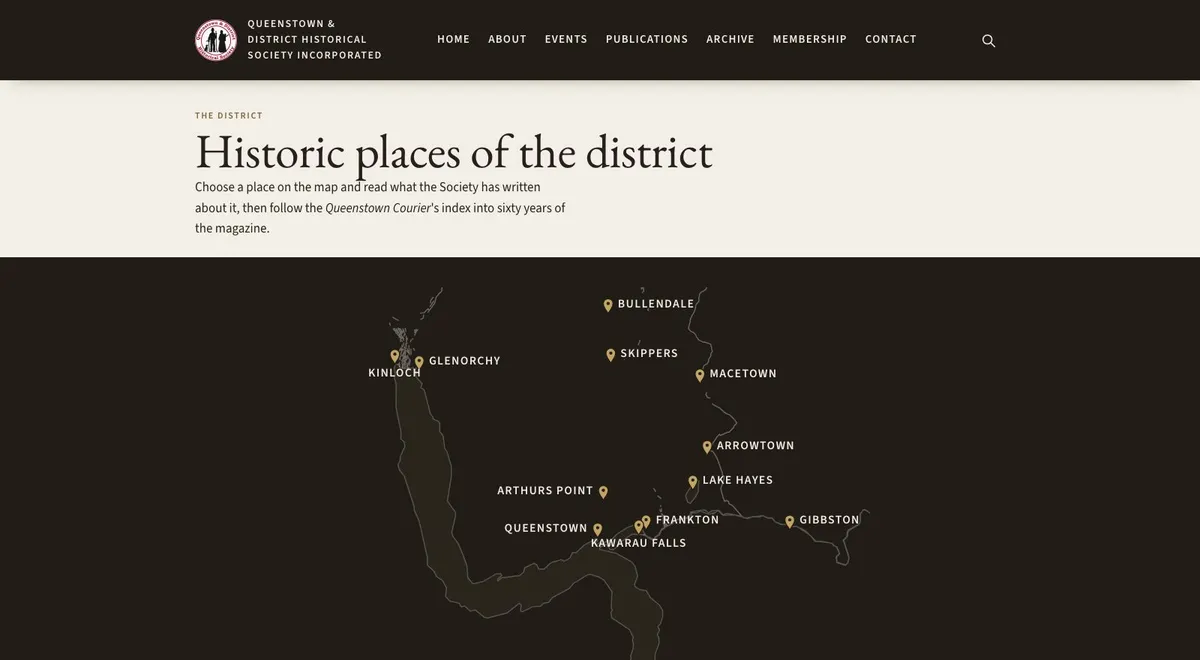
A map of the district, drawn from LINZ topographic data, pins thirteen historic places from Kinloch to Kingston. Each place links to the stories about it and to every Courier index entry that names it. The events programme runs back to 2011, with reports and photographs from each season.
Volunteers add stories, events and new issues through a simple editing screen with a written guide beside it. Checks run before every deploy, so a save that would break a citation or leave a photograph uncredited never reaches the live site. All 139 addresses from the old site redirect to their new homes, and every account, from the domain to the hosting, belongs to the Society.
The site went live in September 2026. It is fully static: no database, nothing to patch, and quick on a phone.
Want something built like this? Start a project.